Montreal’s Concrete Forest
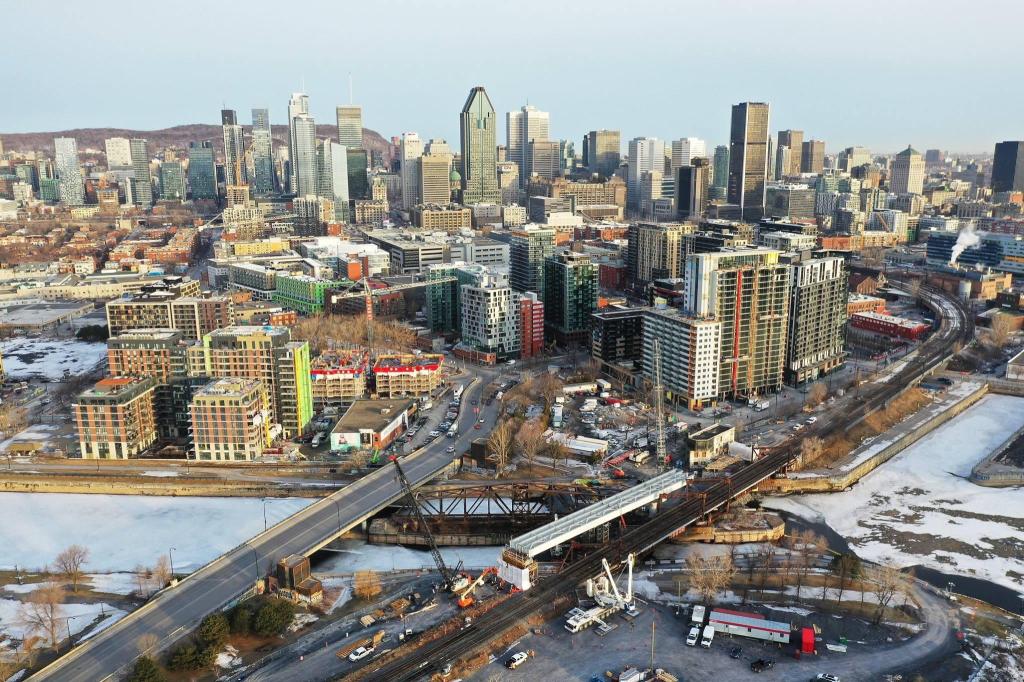
Even though I was not born in Canada, I have lived in Montreal my entire life and know it like the back of my hand. I live on Nuns’ Island, an island located in the St Lawrence. A few years back, when I was leaving my neighborhood to go into the city to meet some of my friends, I looked out the window of the 168 bus and saw something that caught my eye, but not for the right reasons. Griffintown, a small neighborhood south of downtown Montreal, had been overrun by copious amounts of tall yellow and red cranes that were building these towering structures for people to live in. In a city already overrun with orange cones denoting the many construction areas found around the city, adding these tall, metal structures to the skyline did not make it look nicer. In fact, it made it look worse. This urban construction jungle was not very appealing mainly because I could not understand why they were so many condo buildings being put up. Once back home, I got onto my laptop and decided to do some research on what is happening in Griffintown.
Griffintown is a neighbourhood located south of downtown Montreal and is bordered by Notre Dame, McGill and Guy streets as well as the Lachine canal. It is bordered by Little Burgundy, Pointe-Saint-Charles and Cité du Havre. It was developed in the 19th century as a neighborhood for the working-class immigrant from Ireland during a mass immigration wave in 1815 which saw Griffintown, formally known as Nazareth, go from an agricultural area to a residential one. This borough has undergone numerous urban revival projects since 1980s and has seen a number of controversial real estate developments in the past decade. With only 6% of Griffintown’s population being aged between 0 and 14 years old, it is the preferred residential district of many young professionals as around 37% of the population are aged between 24 and 35 years old, which is more than double Montreal’s population of 24 to 35-year-olds.
Furthermore, the demographics seem to be changing as this area has experienced the highest rate of population growth in Montreal. In fact, Griffintown’s population increased by 642% since 2011. A huge increase in population usually means that the demography of this region should see some change as many new people with different ethnic backgrounds, ages, cultures, etc. will surely affect Griffintown’s statistics. Is that the case?
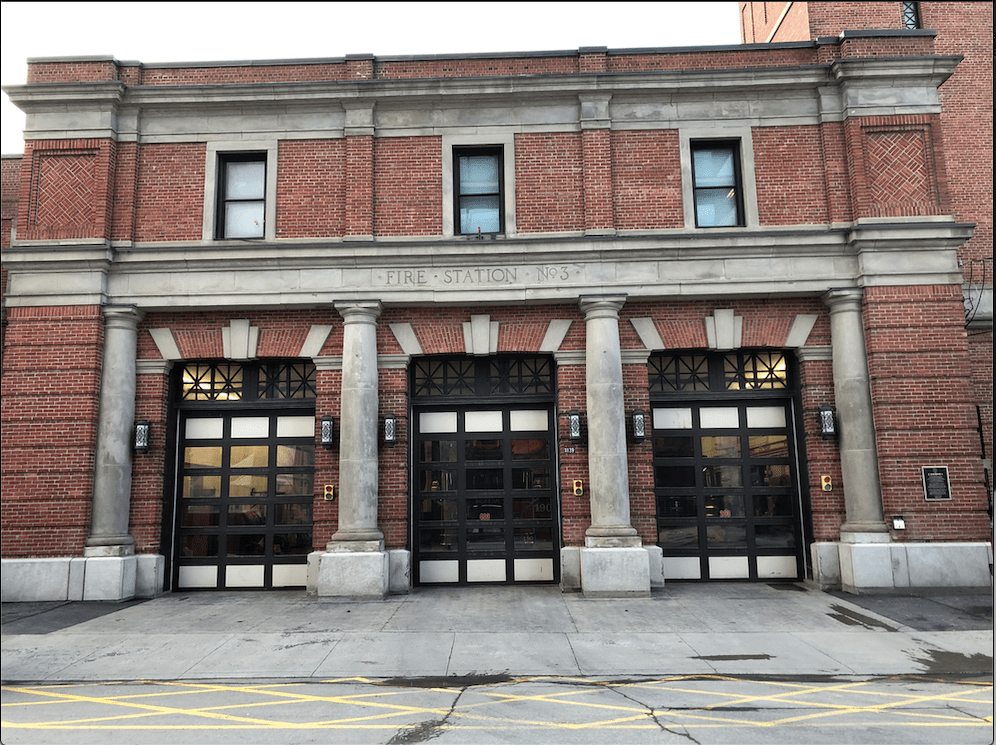
The goals of the first few projects for Griffintown were to convert old industrial buildings into low-rise dwellings, an example of this conversion can be seen where an old industrial building has been turned into a fire station. At first, their plan was to turn Griffintown into a neighbourhood similar to N.D.G., where there is a mixture of high-rises, small buildings and townhouses, allowing families more room and more land. But, this plan was soon replaced with a move towards hyperdensity. Many buildings and neighbourhood blocks were replaced with new buildings, and condominium towers taller than 20 storeys. Because of this shift, an uproar occurred and the city of Montreal received a lot of criticism and was accused that they did not put enough effort into the urban planning of this district. Several months after they gave the green light to real estate development project, the city of Montreal later launched a public consultation process with many thinking that it was now too late to make any significant changes.
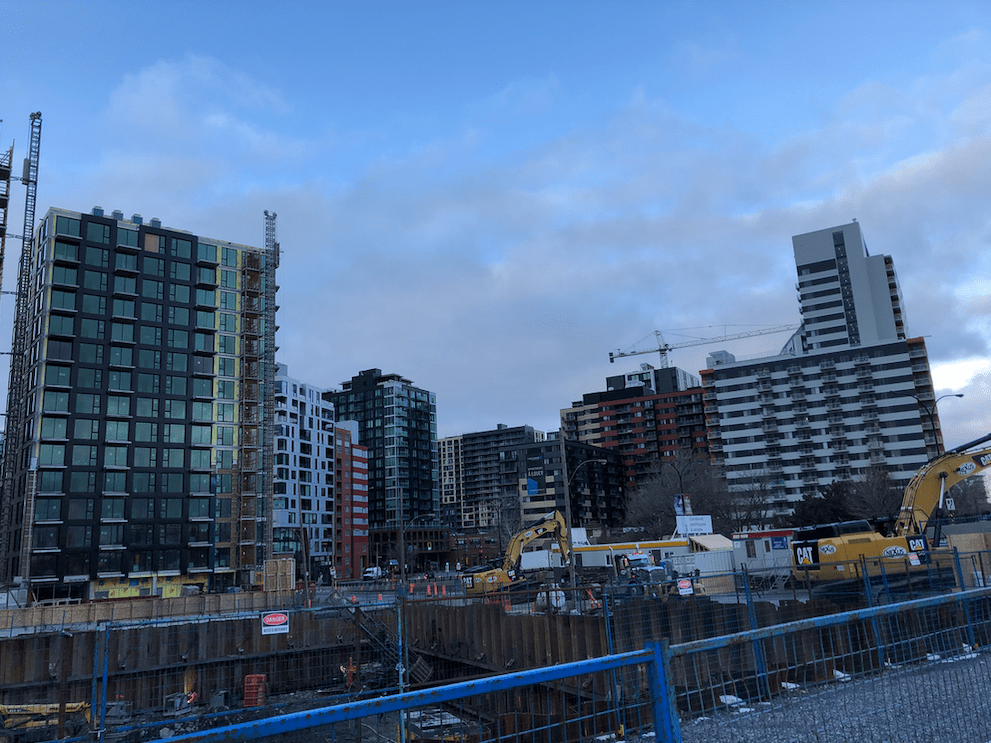
It is easy to see why the people who are living in Griffintown are unhappy about the hyperdensity route that the real estate planners are taking. In fact, we can see numerous amounts of high-rises present and hardly sense any charm or personality in this area. All you can see is a seamlessly infinite amount of these bland grey structures, with the only colors around them being the bright yellow machinery used to construct these cement towers as well as the red and green tarps that cover where the windows will be placed. Raphaël Fischler, director of the school of urban planning at McGill, says that the lack of imagination is due to the fact that “developers are interested in putting down as many condos as possible that sell as well as possible. They are not so interested in innovation, although they benefit from the branding.” In addition, this lack of creativity has left numerous people upset, people like Harvey Lev. Lev, a landowner and community activist who is being forced to sell his plots of land to developers, argues that “the best neighbourhoods are those with three and four-storey dwellings, like the Plateau, Rosemont, and N.D.G.,” places where townhouses and low rising buildings are prominent. These low-rising structures give characteristic to the area, allowing people to actually enjoy these neighbourhoods because, just like Lev mentions,
“who in their right mind wants to live in a neighbourhood that’s interspersed with 20-storey non-architectural towers?”
With a lot of negative connotation surrounding hyperdensity, it is no surprise that it comes with its fair share of consequences, whether that be mental or economical and societal. In fact, communities with rapid community growth also have an increase in mental health caseloads. A study looking into different communities and how the mental health cases seem to grow disproportionately to the population proves that hyperdensity has an impact on the residents. [When looking at the statistics found on this study, it is easy to notice that ]the author behind the study mentions how in a small town in northwestern Colorado there was an 189% increase in total mental health caseloads between 1976 and 1978, which was the lowest figure of the study period. This huge increase might be excused by the fact that there was also quite a high increase in total population, however, the percentage of yearly population increase was 90%, which is half as much as the largest increase in mental health cases. And if we would compare the 1976-1978 mental health caseload increase to the 1976-1978 population increase, that number would be a lot higher.
Moreover, hyperdensity has also had an impact on many economic aspects. As a matter of fact, rapid community growth has had noticeable impacts on savings and investment. First off, when looking at savings, and more specifically household savings, it is important to note that, for the economy as a whole, capital per person can increase at a much faster pace if population growth is slower. Think about it this way, if your basement is slowly flooding with water and all you had was a bucket, you would want the flooding to happen at a slower rate because you will have an easier time removing the water. This is same the idea as capita per person, because if population growth is slow, then they will have enough time to adapt the changing population and thus increasing their capital quicker. In addition, female participation in the labor tend to be higher in homes with small families, in other words, communities with barely any population growth. These two factors have an effect on savings because, if hyperdensity starts to blossom in their communities, the capital that each person has will decrease, giving them less financial support. Furthermore, when communities start seeing an increase in the number of babies being born, it will no doubt mean that a lot of women will have to leave the workforce either for a short period time (maternity leave) or for longer periods of time. In either case, this will bring in less revenue for the family. In other words, having hyperdensity can lead to a decrease in income for families living in those neighborhoods, which gives them less of a financial “pillow” on case of an emergency.
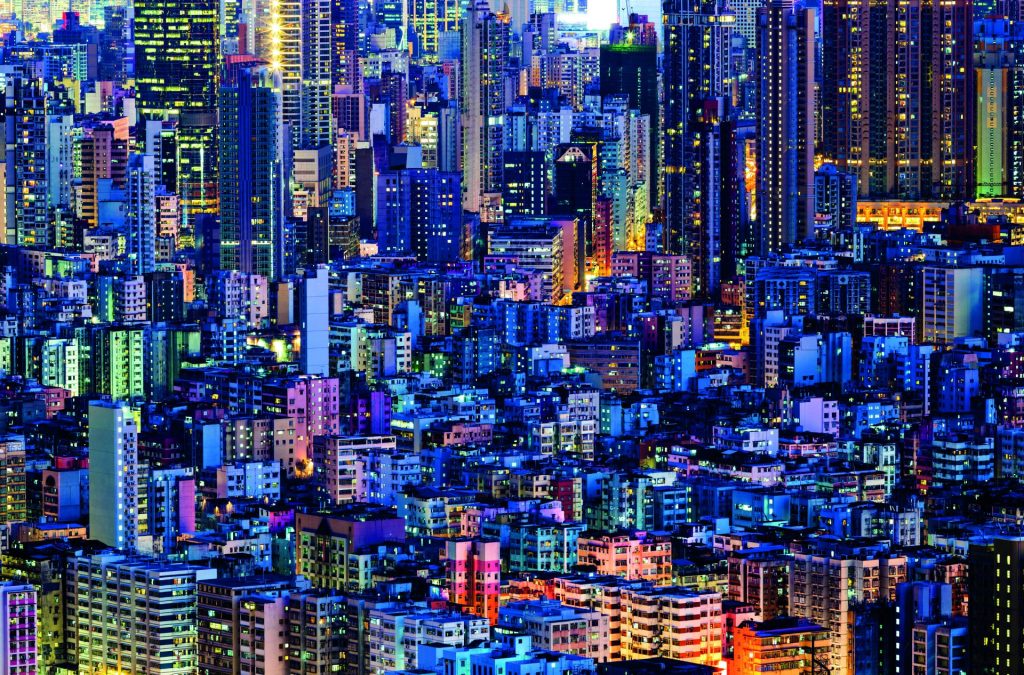
Now, I have been giving hyperdensity a bad reputation, making it seem like we should completely avoid it, however, there are a lot of positives that can come from this situation. One notable to advantage to hyperdensity would be its environmental benefits. According to London School of Economics professor Anne Power, an area with a minimum density of about 30 to 50 homes per hectare can greatly reduce the dependency on cars by making public transport more effective and viable as well as making workplaces and shops merely walking or biking distances away, completely negating the use of cars and buses altogether. Other benefits to the environment would be the decrease in the use of natural environment around us. In fact, in “Cities for a Small Country”, a book co-written by Anne Power, they argue that by doubling the amount of homes in urban sectors in the UK by 50 homes per hectare, they would be able to remove the need to find land for 1.5 million homes. It mentions that “by living together in close proximity, we can accommodate far more of the world’s population, use less energy, concentrate goods and services, design ecologically sensitive buildings and move around more efficiently.” For a lot of people, including the United Nations and its “principles for sustainable neighbourhood planning”, hyperdensity is something that needs to happen or else the entire world will have to sacrifice an uncanny amount of land. Griffintown is only a hop, skip, and a jump away to Montreal, allowing residents to explore the rustic and historic buildings and cobbled streets of Old Montreal as well as the relaxing nature that the lush green trees offer on Mount Royal all in one trip.
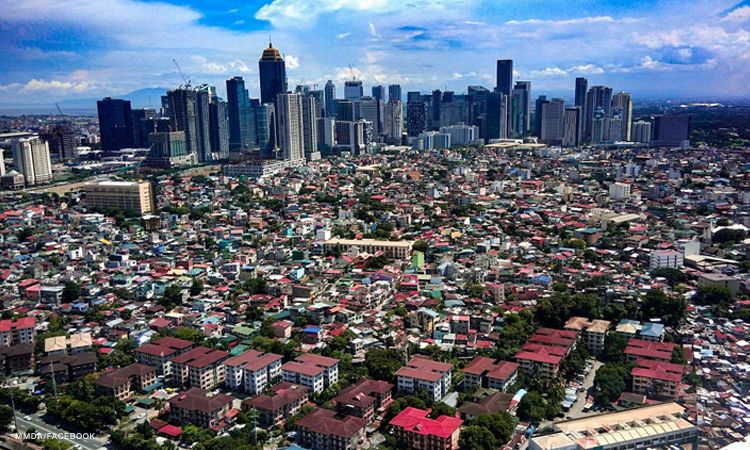
In addition, this increase in density will also have quite a big impact on the economic side of things. In fact, because cities offer far greater opportunities for economic growth, it makes them responsible for 80% of global GDP even though they currently house half of the world’s population. A good example of this would be Manila. Manila, which is in the top 20 for most densely populated cities in the world, accounts for almost half of the Philippines’ GDP, despite the fact that 12% of its population call it home. With these benefits in mind, it should be known that hyperdensity is the way of the future and one of many ways to help out our environment.
I am in no way in the position to determine whether hyperdensity is a positive or negative thing for society, however, in my eyes, I think that with a little bit of work, it can lead to a lot of good. Having all those environmental benefits will intrigue a lot of people as our environment and its future is a hot topic nowadays. If we are able to implement certain aspects, such as having an easier access to establishments that help with mental health problems for example, could make it so that these communities will have a lot more positives than negatives. Promoting the positive and reducing the negative is what I like to call, killing two birds with one stone.
 Luke's Blog